A row of trees, an old fence, the edge of a gravel driveway. People treat those things as the property line for years, right up until a survey says otherwise. In West Michigan I have watched what looks like a few harmless inches turn into removed fences, corrected titles, and two neighbors who used to wave across the yard and now do not. Knowing exactly where your land starts and stops is not a technicality. Those inches are legal ownership of a major asset, and the markers you can rely on are rarely the ones you see from the porch.
Why boundary disputes start in the first place
Almost every fight over a property line traces back to the same few roots, and bad faith is rarely one of them. Surveys go missing or were never ordered, subdivision plats get misread on older lots where the original stakes are long gone, and driveways and fences get shared by handshake and never written down. Little by little something crosses the line: a shed, a deck, a row of arborvitae that seemed safely inside the yard. I think of a homeowner near Fruitport who built a fence along what everyone assumed was the line, a tidy run of mature trees. When the lot was finally surveyed for a sale, the fence sat roughly two feet onto the neighbor's parcel, which meant moving it and cleaning up the title. Nobody schemed. They trusted the trees instead of the iron in the ground, the most common way these problems begin.
What a boundary survey actually does
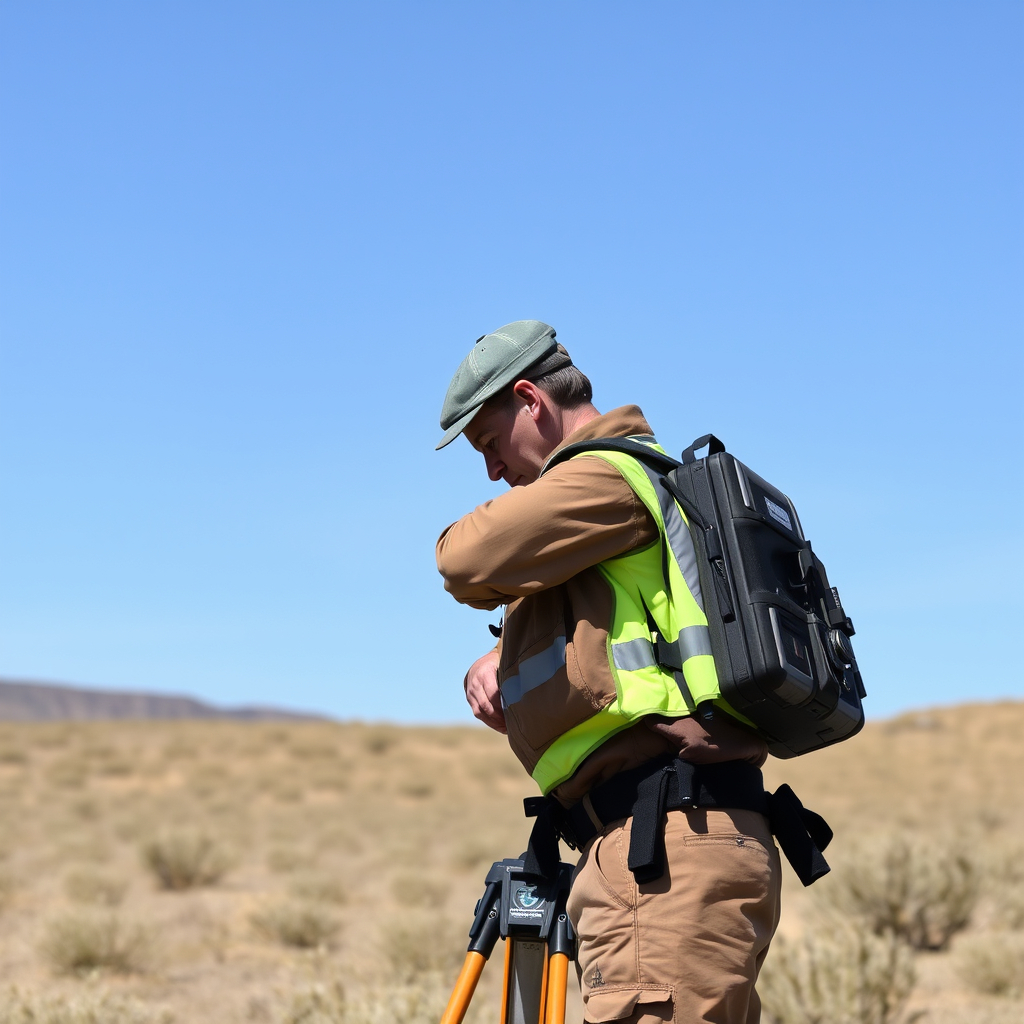
A boundary survey is the most reliable way to know where your lines really are, and in Michigan that work is reserved for a licensed professional surveyor. A neighbor's opinion, a fence, and a county map online are not the same as a sealed survey, and only the survey carries weight if the question gets serious. The surveyor takes the legal description from your deed, ties it to physical corner markers on the ground (usually iron stakes or pins), locates your fences and buildings and anything that encroaches, and maps easements and right-of-way lines. Easements matter more than people expect, because one can let a utility, a road agency, or even a neighbor use part of your land without owning it. Ask for the sealed report and the survey drawing: the plat shows the subdivision, the survey shows your specific lot.
Finding your lines without overpaying
You can do real homework before you call a surveyor. A plot plan or an old survey is sometimes tucked inside your closing file, and the county Register of Deeds and your local assessor can pull plat records and the recorded legal description for your parcel. One trap worth naming: most West Michigan municipalities now publish GIS property maps online, and while they are handy for getting your bearings, they are for general reference only and are not legally binding. Those lines are approximations layered over aerial photos and can be off by several feet, so do not make a fence or building decision based on what you see on a screen.
When you need certainty, you hire the surveyor. For a typical residential lot here, a boundary survey often runs from a few hundred to roughly a thousand dollars, with larger, wooded, or rural parcels costing more. Set against the value of the land, it is usually the cheapest insurance in the transaction.
When a neighbor has crossed the line
If you find a fence, shed, or driveway sitting on your land, the first move is to slow down. In most cases the neighbor has no idea, because they inherited the same wrong assumptions the last owner had. Pull your deed and your survey, document the issue with dated photos, and raise it in writing, politely, so there is a record of the conversation. Most of these resolve neighbor to neighbor once a real survey is on the table. When they do not, a real estate attorney is the right professional to bring in, and this is where an agent steps back, because the next steps are legal ones. An attorney can pursue a quiet-title action or paper a boundary-line agreement that both sides sign.
One Michigan wrinkle makes acting early important. Under the doctrine of adverse possession, a property line can legally shift when someone uses land that is not theirs openly and continuously for a long enough period, generally fifteen years in Michigan. It is fact-specific and far from automatic, and whether any situation qualifies is a legal question for an attorney. But the lesson is plain: the longer an encroachment sits unchallenged, the more time can work against you.
Preventing the problem before you build
The cheapest boundary dispute is the one that never happens, and prevention is mostly a matter of sequence. Before you install a fence, raise a shed, or add onto the house, get the lot surveyed so you are building from the real line. Then check your township's setback rules, because nearly every West Michigan community requires structures to sit back a minimum distance from side and rear lot lines, and sheds and garages often carry their own. Those figures vary by municipality and zoning district, so call your local zoning or building department and confirm the number for your address before you build, not after a complaint shows up. And never treat an old fence or a row of bushes as an official border. They are landmarks, not legal lines.
Fixing it on paper so it actually counts
When neighbors agree to settle a small overlap, the fix only holds if it is written down. A boundary-line agreement needs to be signed by both owners and recorded with the county Register of Deeds, because a friendly understanding that never reaches the public record will not bind whoever owns the place next.
For anything bigger, like moving where a line falls or carving a parcel apart, you are into a lot-line adjustment or a land-division application that runs through the township under Michigan's Land Division Act, the 1967 law governing how parcels get split in this state. The common thread is recording. A handshake that never reaches the Register of Deeds tends to come undone when a house changes hands.
The bottom line
Boundary issues feel high-stakes because they are, but they are solvable when you know where the real lines are and deal with them early. The whole game is documentation, a calm conversation, and the right professional in the right seat: a surveyor to find the line, an attorney to settle a dispute, an agent to help you see it coming. If you are buying, selling, or building in West Michigan and want help reading a survey or finding a trusted local surveyor, reach out. I would rather walk the lines with you before the shovel goes in than untangle them afterward.