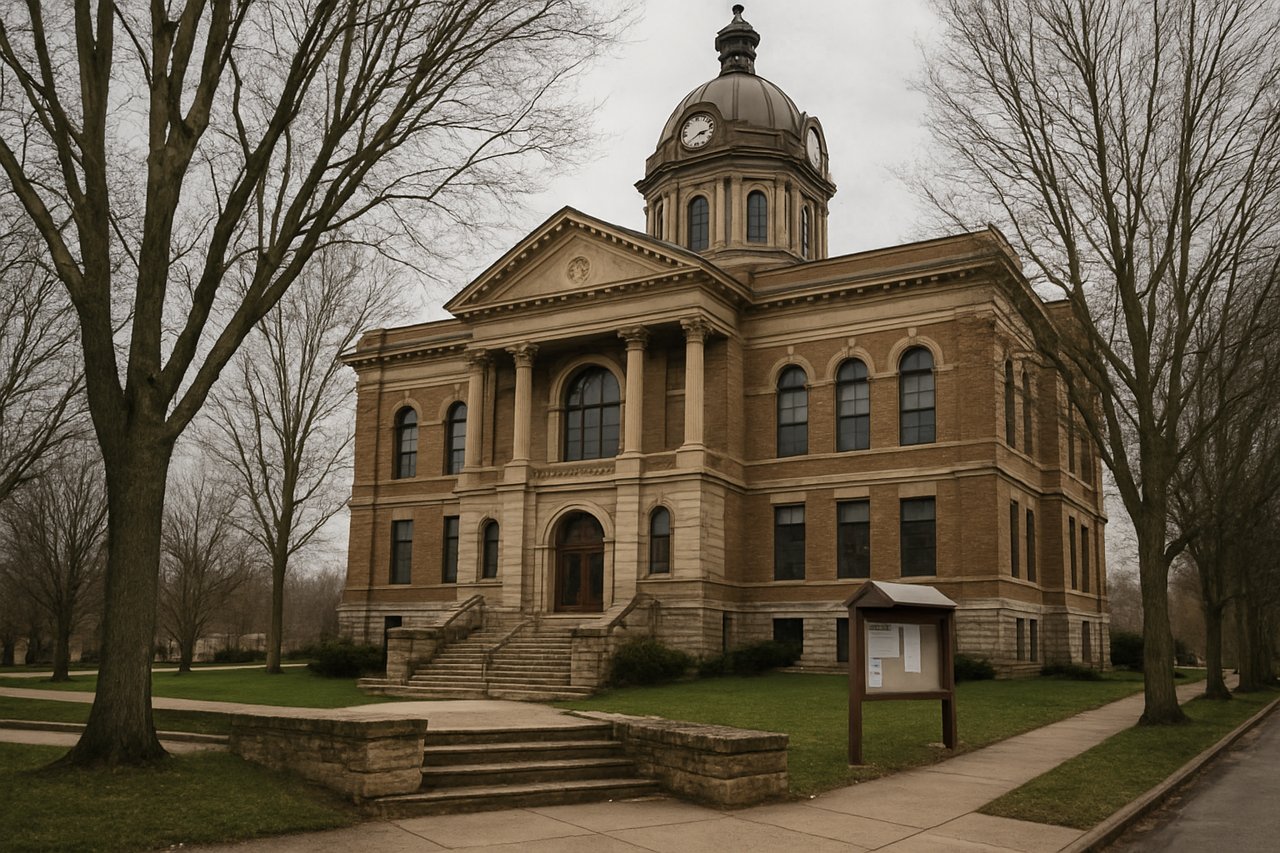
 Every year I get a few calls from people who are scared, embarrassed, or both. They have fallen behind on property taxes, and somewhere along the way they got a postcard, a phone call, or a letter from a company telling them their home is about to be lost forever. Or worse, telling them that for a small fee, that company can swoop in, pay the back taxes, and take the house out from under them. Most of what these folks have heard is either wrong or twisted just enough to scare them into a bad decision. So let me lay out how Michigan property tax foreclosure actually works, in plain language, with West Michigan in mind.
## The clock starts the year taxes go unpaid
In Michigan, property taxes are billed locally (summer and winter bills here in West Michigan), but the foreclosure process runs through the county treasurer. When you do not pay, the bill does not just disappear or quietly grow. It moves through a defined statutory timeline under what is commonly called the General Property Tax Act. The important thing to understand is that this is a multi-year process. You do not lose your home the first year you fall behind. But the clock is real, and it does not stop on its own.Roughly speaking, taxes that go unpaid become delinquent at the start of the following year, when they are turned over to the county treasurer. From that point, interest and fees begin to accumulate, and the timeline toward forfeiture and then foreclosure is set in motion. I am describing the general framework here, not legal advice. If you are in this situation, the county treasurer's office and an attorney are the people who can tell you exactly where your specific parcel stands.
## Forfeiture is not foreclosure, and that matters
Here is where a lot of panic comes from. People hear the word "forfeiture" and assume the house is gone. It is not. Forfeiture is a legal step that happens roughly a year into delinquency, and it mostly affects the cost to redeem and the county's ability to eventually foreclose. You do not lose ownership at forfeiture. You still live there. You still own it. The interest rate on what you owe does jump significantly at this stage, which is why catching it early saves real money, but forfeiture is a warning shot, not the end.Foreclosure is the step that actually transfers title, and in Michigan that happens through a circuit court judgment of foreclosure. This typically lands around the third year of the process, give or take depending on timing. The county treasurer petitions the court, notices go out, and there is a hearing. Once the court enters that judgment and the redemption deadline passes, ownership transfers to the county (the foreclosing governmental unit). That is the moment that matters most.
## The redemption period, and when it truly ends
The most misunderstood part of all this is redemption. Michigan does give you a redemption window, a period during which you can pay everything owed (taxes, interest, penalties, and fees) and keep your home free and clear. But it is not open-ended, and it is far shorter than people imagine.In current Michigan practice, the hard deadline is generally March 31 of the foreclosure year (after the judgment of foreclosure has entered). Once that date passes, redemption is over. There is no grace period where you can show up with cash in April and undo it. This is the single most important date for anyone behind on taxes to know, and it is exactly the part nobody explains clearly. If you are facing foreclosure, find out from the county treasurer precisely which March 31 applies to your parcel, and do not assume you have more runway than you do.
## How county tax auctions actually work
After the county takes title, the property usually heads to a public auction. In West Michigan, these are run county by county (Kent, Ottawa, Muskegon, Allegan, and so on), and many counties use an online platform to run the bidding. There is typically a first round where the opening bid covers the back taxes and costs, and if a property does not sell, a second round at a lower threshold.Two things people get wrong here. First, these are not secret insider events. Anyone can register and bid, and the schedules are public. Second, buying at a tax auction is not a magic discount machine. You are often buying with limited information, sometimes without the ability to inspect the interior, and you inherit whatever condition and occupancy situation comes with it. I have watched buyers win an auction and then discover the title needs cleanup, the property needs far more work than expected, or someone is still living there. It can absolutely be a smart move, but it is a sophisticated-buyer game, not a shortcut to free real estate.
## The truth about "we can take your home for back taxes" companies
Now the part that makes me the most frustrated. There are companies and individuals who market themselves to people behind on taxes with a pitch that sounds like this: "Pay us, or let us pay your back taxes, and we will save your home (or we will own it)." Let me be blunt. In Michigan, a stranger paying your delinquent taxes does not give them ownership of your home. The redemption process runs through you and the county, not through some third party who quietly covers a bill. The idea that someone can secretly buy your house by paying your taxes is, for the most part, a myth designed to scare or rush you.What does happen is more subtle. Some operators will offer to buy your property fast, for far less than it is worth, while you are panicked and the redemption clock is ticking. Others charge fees to "help" with paperwork you could do yourself or with the treasurer's assistance. And there is a separate, legitimate issue worth knowing: after a 2020 Michigan Supreme Court decision and later changes, there are situations where former owners may be entitled to surplus proceeds when a foreclosed property sells for more than what was owed. That is a real right, and there are people who will try to take a cut of money that is rightfully yours to claim. Be skeptical of anyone who finds you first and wants a percentage.
## What to actually watch for in West Michigan
If you are behind, the calmest, cheapest move is almost always to contact your county treasurer early. West Michigan treasurers have payment plan options and hardship provisions, and they would generally rather work something out than foreclose. Open the mail, even when it is scary. Write down your March 31 deadline. Talk to an attorney about your specific situation and a CPA if there are tax consequences to a sale. And if you do decide selling is the right answer, understand that you usually have more value to recover by selling on the open market before foreclosure than by handing the keys to whoever called you first.I have walked alongside people in exactly this spot. Sometimes the right answer is to fight to keep the house. Sometimes it is to sell on your own terms while you still control the timeline and the price. Either way, the worst outcome is the one driven by fear and a ticking clock you did not understand. If you are dealing with delinquent taxes anywhere in West Michigan and you just want someone to explain your real options without a sales pitch, I am happy to talk it through. No pressure, and no judgment.
Every year I get a few calls from people who are scared, embarrassed, or both. They have fallen behind on property taxes, and somewhere along the way they got a postcard, a phone call, or a letter from a company telling them their home is about to be lost forever. Or worse, telling them that for a small fee, that company can swoop in, pay the back taxes, and take the house out from under them. Most of what these folks have heard is either wrong or twisted just enough to scare them into a bad decision. So let me lay out how Michigan property tax foreclosure actually works, in plain language, with West Michigan in mind.
## The clock starts the year taxes go unpaid
In Michigan, property taxes are billed locally (summer and winter bills here in West Michigan), but the foreclosure process runs through the county treasurer. When you do not pay, the bill does not just disappear or quietly grow. It moves through a defined statutory timeline under what is commonly called the General Property Tax Act. The important thing to understand is that this is a multi-year process. You do not lose your home the first year you fall behind. But the clock is real, and it does not stop on its own.Roughly speaking, taxes that go unpaid become delinquent at the start of the following year, when they are turned over to the county treasurer. From that point, interest and fees begin to accumulate, and the timeline toward forfeiture and then foreclosure is set in motion. I am describing the general framework here, not legal advice. If you are in this situation, the county treasurer's office and an attorney are the people who can tell you exactly where your specific parcel stands.
## Forfeiture is not foreclosure, and that matters
Here is where a lot of panic comes from. People hear the word "forfeiture" and assume the house is gone. It is not. Forfeiture is a legal step that happens roughly a year into delinquency, and it mostly affects the cost to redeem and the county's ability to eventually foreclose. You do not lose ownership at forfeiture. You still live there. You still own it. The interest rate on what you owe does jump significantly at this stage, which is why catching it early saves real money, but forfeiture is a warning shot, not the end.Foreclosure is the step that actually transfers title, and in Michigan that happens through a circuit court judgment of foreclosure. This typically lands around the third year of the process, give or take depending on timing. The county treasurer petitions the court, notices go out, and there is a hearing. Once the court enters that judgment and the redemption deadline passes, ownership transfers to the county (the foreclosing governmental unit). That is the moment that matters most.
## The redemption period, and when it truly ends
The most misunderstood part of all this is redemption. Michigan does give you a redemption window, a period during which you can pay everything owed (taxes, interest, penalties, and fees) and keep your home free and clear. But it is not open-ended, and it is far shorter than people imagine.In current Michigan practice, the hard deadline is generally March 31 of the foreclosure year (after the judgment of foreclosure has entered). Once that date passes, redemption is over. There is no grace period where you can show up with cash in April and undo it. This is the single most important date for anyone behind on taxes to know, and it is exactly the part nobody explains clearly. If you are facing foreclosure, find out from the county treasurer precisely which March 31 applies to your parcel, and do not assume you have more runway than you do.
## How county tax auctions actually work
After the county takes title, the property usually heads to a public auction. In West Michigan, these are run county by county (Kent, Ottawa, Muskegon, Allegan, and so on), and many counties use an online platform to run the bidding. There is typically a first round where the opening bid covers the back taxes and costs, and if a property does not sell, a second round at a lower threshold.Two things people get wrong here. First, these are not secret insider events. Anyone can register and bid, and the schedules are public. Second, buying at a tax auction is not a magic discount machine. You are often buying with limited information, sometimes without the ability to inspect the interior, and you inherit whatever condition and occupancy situation comes with it. I have watched buyers win an auction and then discover the title needs cleanup, the property needs far more work than expected, or someone is still living there. It can absolutely be a smart move, but it is a sophisticated-buyer game, not a shortcut to free real estate.
## The truth about "we can take your home for back taxes" companies
Now the part that makes me the most frustrated. There are companies and individuals who market themselves to people behind on taxes with a pitch that sounds like this: "Pay us, or let us pay your back taxes, and we will save your home (or we will own it)." Let me be blunt. In Michigan, a stranger paying your delinquent taxes does not give them ownership of your home. The redemption process runs through you and the county, not through some third party who quietly covers a bill. The idea that someone can secretly buy your house by paying your taxes is, for the most part, a myth designed to scare or rush you.What does happen is more subtle. Some operators will offer to buy your property fast, for far less than it is worth, while you are panicked and the redemption clock is ticking. Others charge fees to "help" with paperwork you could do yourself or with the treasurer's assistance. And there is a separate, legitimate issue worth knowing: after a 2020 Michigan Supreme Court decision and later changes, there are situations where former owners may be entitled to surplus proceeds when a foreclosed property sells for more than what was owed. That is a real right, and there are people who will try to take a cut of money that is rightfully yours to claim. Be skeptical of anyone who finds you first and wants a percentage.
## What to actually watch for in West Michigan
If you are behind, the calmest, cheapest move is almost always to contact your county treasurer early. West Michigan treasurers have payment plan options and hardship provisions, and they would generally rather work something out than foreclose. Open the mail, even when it is scary. Write down your March 31 deadline. Talk to an attorney about your specific situation and a CPA if there are tax consequences to a sale. And if you do decide selling is the right answer, understand that you usually have more value to recover by selling on the open market before foreclosure than by handing the keys to whoever called you first.I have walked alongside people in exactly this spot. Sometimes the right answer is to fight to keep the house. Sometimes it is to sell on your own terms while you still control the timeline and the price. Either way, the worst outcome is the one driven by fear and a ticking clock you did not understand. If you are dealing with delinquent taxes anywhere in West Michigan and you just want someone to explain your real options without a sales pitch, I am happy to talk it through. No pressure, and no judgment.Legal & Development
Michigan Tax Foreclosure Auctions: What to Know
Every year I get a few calls from people who are scared, embarrassed, or both. They have fallen behind on property taxes, and somewhere along the way they got a postcard, a phone call, or a letter from a company telling them their home is about to be lost forever. Or worse, telling them that for a small fee, that company can swoop in, pay the back taxes, and take the house out from under them. Most of what these folks have heard is either wrong or twisted just enough to scare them into a bad decision. So let me lay out how Michigan property tax foreclosure actually works, in plain language, with West Michigan in mind.
## The clock starts the year taxes go unpaid
In Michigan, property taxes are billed locally (summer and winter bills here in West Michigan), but the foreclosure process runs through the county treasurer. When you do not pay, the bill does not just disappear or quietly grow. It moves through a defined statutory timeline under what is commonly called the General Property Tax Act. The important thing to understand is that this is a multi-year process. You do not lose your home the first year you fall behind. But the clock is real, and it does not stop on its own.Roughly speaking, taxes that go unpaid become delinquent at the start of the following year, when they are turned over to the county treasurer. From that point, interest and fees begin to accumulate, and the timeline toward forfeiture and then foreclosure is set in motion. I am describing the general framework here, not legal advice. If you are in this situation, the county treasurer's office and an attorney are the people who can tell you exactly where your specific parcel stands.
## Forfeiture is not foreclosure, and that matters
Here is where a lot of panic comes from. People hear the word "forfeiture" and assume the house is gone. It is not. Forfeiture is a legal step that happens roughly a year into delinquency, and it mostly affects the cost to redeem and the county's ability to eventually foreclose. You do not lose ownership at forfeiture. You still live there. You still own it. The interest rate on what you owe does jump significantly at this stage, which is why catching it early saves real money, but forfeiture is a warning shot, not the end.Foreclosure is the step that actually transfers title, and in Michigan that happens through a circuit court judgment of foreclosure. This typically lands around the third year of the process, give or take depending on timing. The county treasurer petitions the court, notices go out, and there is a hearing. Once the court enters that judgment and the redemption deadline passes, ownership transfers to the county (the foreclosing governmental unit). That is the moment that matters most.
## The redemption period, and when it truly ends
The most misunderstood part of all this is redemption. Michigan does give you a redemption window, a period during which you can pay everything owed (taxes, interest, penalties, and fees) and keep your home free and clear. But it is not open-ended, and it is far shorter than people imagine.In current Michigan practice, the hard deadline is generally March 31 of the foreclosure year (after the judgment of foreclosure has entered). Once that date passes, redemption is over. There is no grace period where you can show up with cash in April and undo it. This is the single most important date for anyone behind on taxes to know, and it is exactly the part nobody explains clearly. If you are facing foreclosure, find out from the county treasurer precisely which March 31 applies to your parcel, and do not assume you have more runway than you do.
## How county tax auctions actually work
After the county takes title, the property usually heads to a public auction. In West Michigan, these are run county by county (Kent, Ottawa, Muskegon, Allegan, and so on), and many counties use an online platform to run the bidding. There is typically a first round where the opening bid covers the back taxes and costs, and if a property does not sell, a second round at a lower threshold.Two things people get wrong here. First, these are not secret insider events. Anyone can register and bid, and the schedules are public. Second, buying at a tax auction is not a magic discount machine. You are often buying with limited information, sometimes without the ability to inspect the interior, and you inherit whatever condition and occupancy situation comes with it. I have watched buyers win an auction and then discover the title needs cleanup, the property needs far more work than expected, or someone is still living there. It can absolutely be a smart move, but it is a sophisticated-buyer game, not a shortcut to free real estate.
## The truth about "we can take your home for back taxes" companies
Now the part that makes me the most frustrated. There are companies and individuals who market themselves to people behind on taxes with a pitch that sounds like this: "Pay us, or let us pay your back taxes, and we will save your home (or we will own it)." Let me be blunt. In Michigan, a stranger paying your delinquent taxes does not give them ownership of your home. The redemption process runs through you and the county, not through some third party who quietly covers a bill. The idea that someone can secretly buy your house by paying your taxes is, for the most part, a myth designed to scare or rush you.What does happen is more subtle. Some operators will offer to buy your property fast, for far less than it is worth, while you are panicked and the redemption clock is ticking. Others charge fees to "help" with paperwork you could do yourself or with the treasurer's assistance. And there is a separate, legitimate issue worth knowing: after a 2020 Michigan Supreme Court decision and later changes, there are situations where former owners may be entitled to surplus proceeds when a foreclosed property sells for more than what was owed. That is a real right, and there are people who will try to take a cut of money that is rightfully yours to claim. Be skeptical of anyone who finds you first and wants a percentage.
## What to actually watch for in West Michigan
If you are behind, the calmest, cheapest move is almost always to contact your county treasurer early. West Michigan treasurers have payment plan options and hardship provisions, and they would generally rather work something out than foreclose. Open the mail, even when it is scary. Write down your March 31 deadline. Talk to an attorney about your specific situation and a CPA if there are tax consequences to a sale. And if you do decide selling is the right answer, understand that you usually have more value to recover by selling on the open market before foreclosure than by handing the keys to whoever called you first.I have walked alongside people in exactly this spot. Sometimes the right answer is to fight to keep the house. Sometimes it is to sell on your own terms while you still control the timeline and the price. Either way, the worst outcome is the one driven by fear and a ticking clock you did not understand. If you are dealing with delinquent taxes anywhere in West Michigan and you just want someone to explain your real options without a sales pitch, I am happy to talk it through. No pressure, and no judgment.
Dave Manley
REALTOR(R) · Legacy Real Estate Partners
Honest guidance for buyers and sellers across West Michigan. Thinking about a move, or just have a question? Reach out, no pressure.