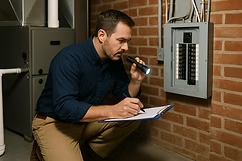
You finally find the one. It checks every box, the photos do not do it justice, and then your agent calls with the line every buyer in this market has heard: there are already multiple offers, the seller wants highest and best by tonight. You are tired of losing. You want yours to be the offer that wins. And somewhere in that pressure, someone floats the idea of waiving the inspection to look stronger. Before you do, take a breath, because that one move can follow you for years. In West Michigan, where frozen pipes, lake-effect roofs, and basements that have seen a lot of water are just part of the housing stock, skipping the inspection is like buying a car without ever lifting the hood. It can get you to the closing table faster. It can also hand you a repair bill you never saw coming and had no chance to negotiate.
What an inspection is actually buying you
A home inspection is not a pass-or-fail test, and a good inspector is not hunting for reasons to kill your deal. What they are really doing is reading the house for patterns: the small signals that tell you a furnace is near the end of its life, that water has been finding its way into a crawlspace, that someone did their own wiring and cut a corner. The point is not to find a perfect home, because there is no such thing. The point is to walk in with your eyes open instead of finding out the hard way after the keys are yours.
In older Michigan homes, certain things come up again and again. Drainage and plumbing. Aging cast-iron drain lines and galvanized supply pipes are common in mid-century houses, and replacing them is not cheap. Water in the lower level. Moisture intrusion in basements and crawlspaces, often tied to improper grading that sends rain toward the foundation instead of away from it, is one of the most frequent findings around here. Roofs and mechanicals. Roofs age faster under heavy snow and freeze-thaw cycles, and furnaces and water heaters that are past their expected lifespan tend to fail at the worst possible time. Electrical. Double-tapped breakers, missing GFCI protection near water, and amateur additions to the panel show up regularly. None of these are automatically deal-killers. Most of them are negotiation points, and that is exactly what you give up when you waive.
What waiving really means
Waiving an inspection does not mean no one looks at the house. It means you are agreeing to take the property as it is, whatever it turns out to be, with no inspection contingency to fall back on. You are removing your right to inspect, raise concerns, ask for repairs or credits, or walk away over what gets found. The seller gets near-total protection, and the financial risk shifts squarely onto you. If the roof starts leaking a month after closing, or that hairline foundation crack opens up over the winter, it is your problem and your checkbook.
People sometimes assume that if something major was wrong, they would have legal recourse. Be careful with that assumption. Michigan generally requires sellers to complete a disclosure statement about the condition of the property, and there are protections against a seller who knowingly conceals or lies about a serious defect. But that is a high bar, it usually means proving the seller knew and hid it, and it is a fight you do not want to be in. The disclosure form is also typically not a warranty, and it does not replace your own inspection. If you have specific questions about your legal position or what a disclosure does and does not cover, that is a conversation for a real estate attorney, not something to settle from a blog post. The cleaner path is simply to keep your inspection so you never have to test those limits.
How to win the home without waiving protection
Here is the part that gets lost in the heat of a bidding war: you can write a genuinely strong, competitive offer and still keep your inspection. Sellers care about certainty and a clean path to closing, and there are several ways to give them that without stripping away your own safety net.
Shorten the window instead of removing it. A tight inspection period, something in the range of a handful of days rather than a week and a half, tells the seller you are serious and ready to move while preserving your right to actually look at the house. To many sellers a short, firm timeline reads as nearly as strong as a waiver, without asking you to fly blind.
Make it information-only. You can structure the inspection so that you are not coming back to demand a list of repairs, you just want to understand the home before you are fully committed. You keep your ability to walk if something genuinely alarming turns up, but you signal that you are not going to nickel-and-dime the seller over a worn washer or a sticky window.
Pre-inspect before you write, when you can. If the seller and their agent allow it, getting an inspector through before you submit lets you offer with confidence and a shorter contingency, because you already know what you are buying. It is not always possible in a fast market, but when the timing works it can be the thing that wins the deal cleanly.
Win on the terms that cost you nothing. Often the strongest move has nothing to do with the inspection at all. A higher earnest money deposit, a flexible closing date that matches the seller's timeline, a slightly stronger price, or a clean offer with fewer odd requests can outshine a riskier competitor. Sellers are weighing the whole package, not just one line. Lean on the levers that make you look reliable rather than the one that makes you vulnerable.
The math that should give you pause
The temptation is always the same: waiving feels like it costs nothing today and might win you the house. The cost is just deferred and hidden. I have watched a buyer drop their inspection to beat out a stack of other offers on a charming older ranch, only to discover real water damage behind finished drywall a couple of months after closing. Repairs like that can run into the thousands or well past it, and there is no one to send the bill to. The excitement of winning evaporates fast when it is replaced by a quote from a contractor. Set that against the cost of an inspection, which in this area is typically a few hundred dollars, and the trade looks very different. You are not saving money by waiving. You are gambling a small known cost against a large unknown one, with the odds stacked toward the house you have not gotten to examine.
How I think about it with my buyers
When a client of mine is staring down a multiple-offer situation, my job is not to talk them out of going for the house. It is to help them go for it without setting a trap for themselves. We look hard at what the seller actually needs, we tighten the terms that build confidence, and we keep the protection that matters. In a fast market the goal is never just to win the house. It is to win the right house, on terms you can live with after the champagne is gone.
If you are competing for a home in West Michigan right now, that is exactly the kind of offer I will help you build: strong enough to get taken seriously, smart enough that you are not signing away your only look under the hood. Winning the house is the easy part. Keeping it a home you are glad you bought is the part worth getting right.